If you wish to support Palestine, you ought to think carefully about what and whom you are supporting. If you think the Israeli response is wrong, you ought to think about why it happened, and what would happen if the Palestinians had every wish fulfilled in an instant.
Here, I will explain why many of the things often repeated about the conflict are either outright lies, or lies by omission, why the accusations of genocide are false, and why painting Israeli occupation (which began after two openly genocidal wars against the country) as the main problem, gives a deceptively skewed view of the conflict.
Denna artikel finns också på svenska.
In the year that has passed since Hamas’ attack on Israel, I have talked to dozens of otherwise kind, loving and compassionate people, who have all come out as fervent supporters of the Palestinian cause. Some of them seem to not even have thought about what started the war – Hamas’ indiscriminate rape, torture, murder and abduction of peaceful civilians – and many mention it in passing, apologetically: “Well, of course the October 7 attacks weren’t acceptable…BUT…”
Some go so far as to call Hamas’ actions if not justifiable then at least understandable, given the Israeli occupation. Others manage to condemn Hamas, but are still far stronger, far more insistent and passionate in their condemnation of the Israeli response. The most common line of reasoning seems to be that because Palestine supposedly is the weaker party in the conflict, Israel has an obligation to show great restraint in their response – they shouldn’t wage all-out war, as they’re now doing, they should merely protect themselves, with the minimum amount of violence necessary.
To some, that may sound like the most balanced, humane stance to take on the conflict, but to me it never has, because it completely ignores who Israel is warring against, why they are fighting this current war, and what would actually happen if they gave up arms, as many activists demand.
What is the war about?
They are fighting Hamas, an islamist organisation that came to power in Gaza following 2006 elections that were deemed by independent observers to be free and fair. Though they have since abolished democracy, Hamas still enjoys relatively strong popular support, and their vision of a free Palestine is very far removed from anything any liberal humanist could possibly associate with freedom. Their foundational charter, as recent as 1988, literally and explicitly calls for the murder of every single Jew. This is the ideology that was put into practice on October 7, as it had been in many previous terror attacks – not an act of war against military combatants, but an unprovoked attack on peaceful civilians, to rape and murder them simply because they were Jews.
It is an ideology as indisputably evil as that of Nazism, and under it no freedoms, no human rights would exist for anyone except those granted privilege by the islamist rulers, in accordance with gruesomely totalitarian Shariah law.
Hamas’ closest contenders for political power in Palestine are the somewhat more moderate, ostensibly social democratic Fatah. Fully democratic parties, such as the Swedish Social Democrats, have gone so far as to call them a “sister party”, which is rather grotesque, considering that they can really only moderate side by side with the death cult of Hamas. Their logo features two crossed rifles and a hand grenade, overlaid over a map where Israel has been erased. The Fatah-run government in the West Bank0000 (where democracy has also been abolished), pays monthly stipends to families of suicide bombers who have murdered civilians, and formally calls them “martyrs”.
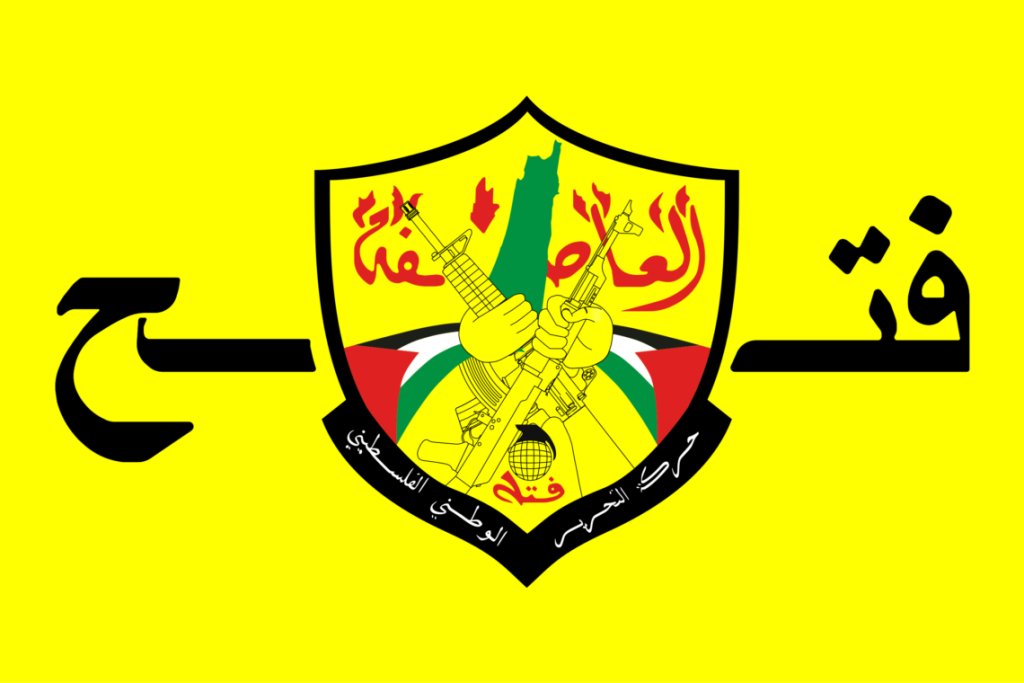
These are the movements that would preside over a “free Palestine”, from the river to the sea. There would be no rights for women. No rights for LGBTQ people. Hardly any political or civil liberties. The Jews in the area would end up either murdered or removed by force.
Contrast this to Israel. For all its flaws, a democracy (freer, even, than the country currently presiding over the EU Council) with open debate, extensive civil and political rights. Even the Arab population, claimed by many anti-Israel activists to be under apartheid (a claim that, notably, is never backed up with any sources), enjoy far stronger civil rights than they would in any neighbouring country. Israel has extremists too, but they are actually faced with opposition, restrained and occasionally prosecuted by a largely liberal state.
In Palestine, violent extremism is the crushingly dominant norm. In the 2006 Gaza election, over 90 percent of the votes went to movements that have actively engaged in and explicitly supported the murder of innocent civilians.
But Israel is killing civilians?
And now, I can hear my angriest antagonists:
“OK, OK, but none of this makes any difference, Israel is the occupier****, they are killing children****!”
Of course, every innocent death is a tragedy, only a psychopath would think otherwise. But Israel is fighting a democratically elected death cult that has no regard for human life – not even for that of their own children. To quote Umm Nidal, elected Hamas representative, who sent three of her sons on suicide missions: “I love my children, but as Muslims we pressure ourselves and sacrifice our emotions for the interest of the homeland.”
Israel is fighting a defensive war, initiated by a staggeringly brutal attack on innocent civilians. They are fighting in extremely densely populated areas, against an organisation gladly willing to sacrifice children, explicitly seeking the eradication of every single Jew, and the subjugation of every human being in the area, to an islamist reign of terror. And even then, they are achieving a lower ratio of civilian-to-combatant deaths than in most other military conflicts – that is, the number of civilians killed for every combatant is lower in Gaza than in virtually every other instance of modern, urban warfare.
To sit comfortably in the peaceful West and demand that Israel fight less fiercely, is an incredibly arrogant position. They have tried. In 2005, they unilaterally withdrew from Gaza, and the Israeli military demolished illegal settlements. Gaza, since then, could have flourished, focused on development and progress.
But what followed? The Palestinians elected a leadership yearning for a second Holocaust, strapping their own children with explosives in pursuit of it. The only thing that limits their “success”, the main reason that Hamas and friends managed to murder “only” 1,139 Israelis last October, is Israel’s military superiority.
How many deaths, then, are acceptable in fighting an enemy that explicitly calls for your eradication? I don’t know, I don’t think anyone does – but the figures clearly show that Israel is NOT wantonly murdering civilians. They are in fact better than many other countries at minimising civilian casualties – even in a situation where their enemy uses civilian infrastructure to wage war, showing less regard for their own civilians, than most civilised people would show for a stray cat. Because of their military superiority, Israel has killed many more Palestinians, than Israelis killed by the openly genocidal Hamas – and some seem to think that this makes their response disproportionate. But what then, would a proportionate response look like? How many murders, rapes and abductions should Israel have to endure, to justify an all out war against those openly and gleefully plotting their genocide?
But Israel is the occupier?
I can hear my antagonists again: “But Israel is the occupier! It’s understandable and justifiable that the Palestinians support movements prioritising resistance against the occupation.” Certainly, Israel’s unlawful occupation of Gaza, the West Bank and the Golan Heights, can rightly be (and constantly is) criticised. However, it is almost always criticised without mentioning when or why it began – framing it as though it was somehow a colonial act of aggression or expansionism by Israel. In reality, it happened after Israel’s neighbours – for the second time in 18 years – announced their intentions to start a genocidal war. Several Arab leaders made explicit calls for genocide in the months leading up to the war:
“The Syrian army, with its finger on the trigger, is united. I believe that the time has come to begin a battle of annihilation.” – Hafez al-Assad, then Defence Minister (later President) of Syria.
“The existence of Israel is an error which must be rectified. This is our opportunity to wipe out the ignominy which has been with us since 1948. Our goal is clear - to wipe Israel off the map.” – Abdul Rahman Arif, President of Iraq
How harshly, then, can Israel be faulted for going a step too far in response? Not very, in my mind. Of course, the situation should have been resolved somehow, but Israeli policies have never been the main obstacle – the main problem has always been the persistent, openly genocidal stance of all of Palestine’s dominant political forces. Some individuals and organisations have denounced violence occasionally, though in a way that can hardly be described as anything more than lip service. Palestinian National Authority president Yasser Arafat won the Nobel Peace Prize in 1993, and in some instances he distanced himself from violence, but elsewhere he continued to advocate the eradication not just of Israel, but of “every last Jew”. His government continued to fund terror, and during his presidency, official PA state television regularly featured children promoting martyrdom.
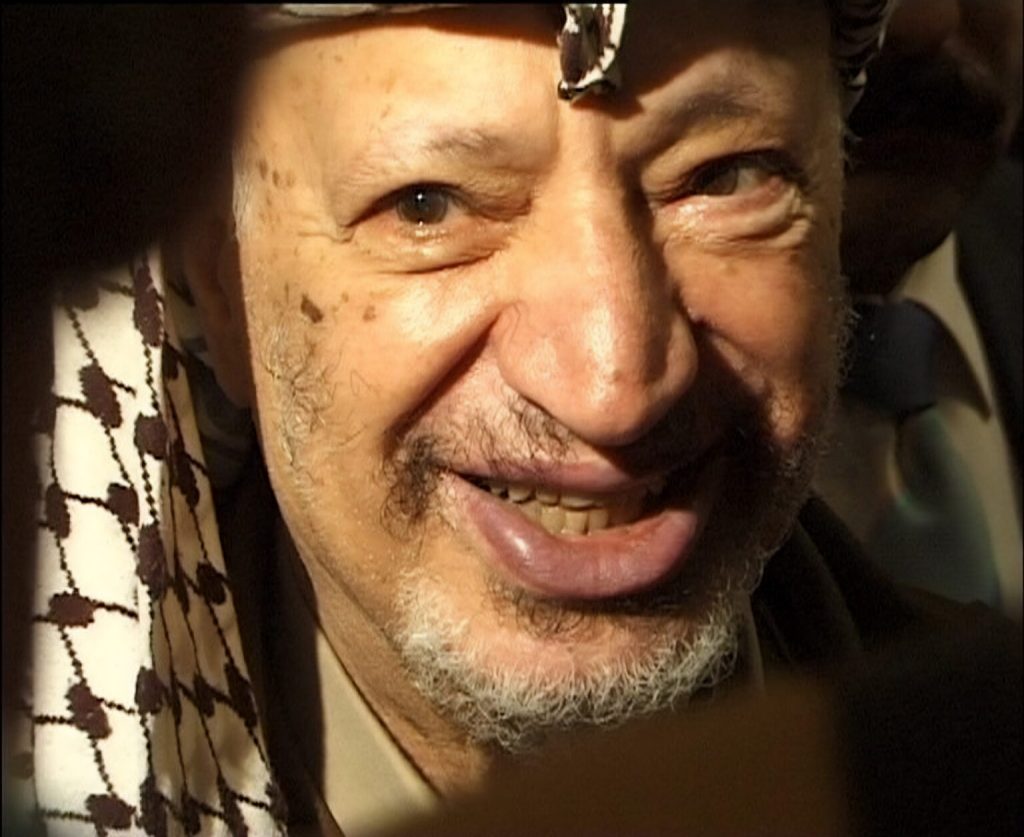
“We will not bend or fail until the blood of every last Jew from the youngest child to the oldest elder is spilt to redeem our land!” – Yasser Arafat, in a speech at the Grand Hotel in Stockholm, on January 30, 1996.
Israeli efforts to contain and limit Palestinian influence must be seen in light of this very ideology. The Palestinian Authority-controlled West Bank is geographically located on a shelf above some of Israel’s most densely populated areas, and everyone knows what would happen if an openly genocidal movement, operating from there, were to grow truly powerful.
But Israel should never have existed!
The last straw of the anti-Israel crowd, with all of the above in mind, seems to be that Israel should never have been established in the first place – that its foundation, and the resulting expulsion of hundreds of thousands of Palestinian Arabs, was unjust in a way that justifies almost any degree of resistance against the Israeli state.
And sure, you can take that stance, and say that the Jews have no right to a nation in the area, considering that they were largely displaced by Muslim and Christian colonisers, many centuries prior. But I’m surprised to see this stance defended by people who are supporters of aboriginal rights elsewhere in the world – because the Jews most certainly were the aboriginal inhabitants of the area. The Palestinians, also, were not the only people to be displaced following geopolitical changes after World War II – but they are the only ones who have continued campaigning, violently, for a right of return – not just for the original refugees, but for their (far more numerous) descendants.
For comparison, a similar number of people were displaced from Finnish Karelia, following the 1940 Moscow Peace Treaty with Russia (~410,000, vs. ~550,000 in Palestine). This of course wasn’t right in any moral sense, but it was quickly accepted as a political reality – and I would never, though this is where I trace my own ethnic heritage, have dreamed of campaigning for a Finnish right of return. Even less so if Finland had been governed by political forces prioritising the retaliatory genocide of Slavic people, over the lives of their own children.
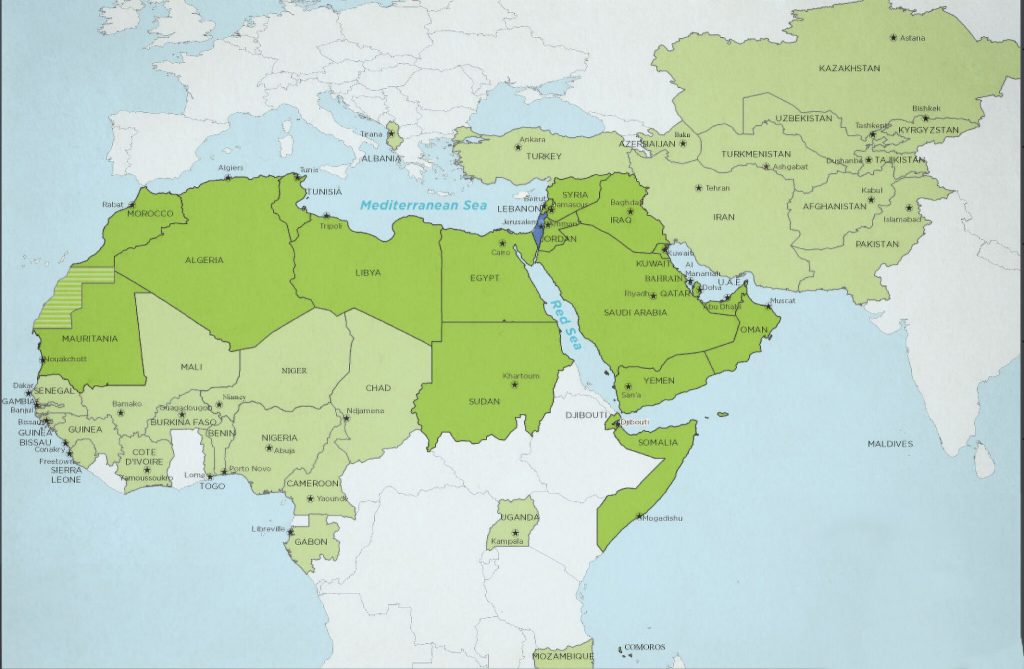
Israel is a tiny sliver in an overwhelmingly Arabic region, which could have absorbed the refugees much more easily than Finland did. Israel’s four neighbours have a combined land area 62 times larger than Israel’s, and had a population almost 50 times larger than the number of Palestinian refugees. By comparison, Finland lost almost a tenth of its territory, and had to integrate 12 percent of its population elsewhere. Such reintegration never happened in the Arab world, however, because the neighbouring countries were much less interested in resolving the situation, much more so in continuing (and using the Palestinians as political pawns in) their genocidal campaign against Israel.
None of this is to say that Israel is faultless. They too have committed transgressions and atrocities – but not to any extent that makes them remarkably worse than any other nation at war. They face constant accusations of genocide, even though they almost always strike defensively, against enemies whose genocidal intentions are open and explicit, yet much less vocally criticised in public debate. Israel has violent, racially motivated extremists too, but they are opposed, restrained, and prosecuted within their own country – whereas in Palestine, violent extremism is the unopposed norm, supported by large swathes of the population, all the way up to the highest echelons of government.
For all its flaws, Israel is a decent country, with strong elements of progressivism and a history of constructive development. Those seeking to ‘replace it’ offer either totalitarian socialism, or totalitarian islamism in its place – and they would create a literal hell on Earth, not just for the few remaining Jews and Christians, but for the Palestinians too (as they already have in Gaza, one of the least politically free regions in the world, roughly on par with China, Iran and Somalia).
This is why I defend Israel, why I oppose attempts to paint them as the aggressor. By all means, criticise them for their faults and misdeeds, but if you wish to call yourself a liberal humanist, be at least as staunchly critical of their adversaries – be open and honest about what a “free Palestine” would mean in reality.